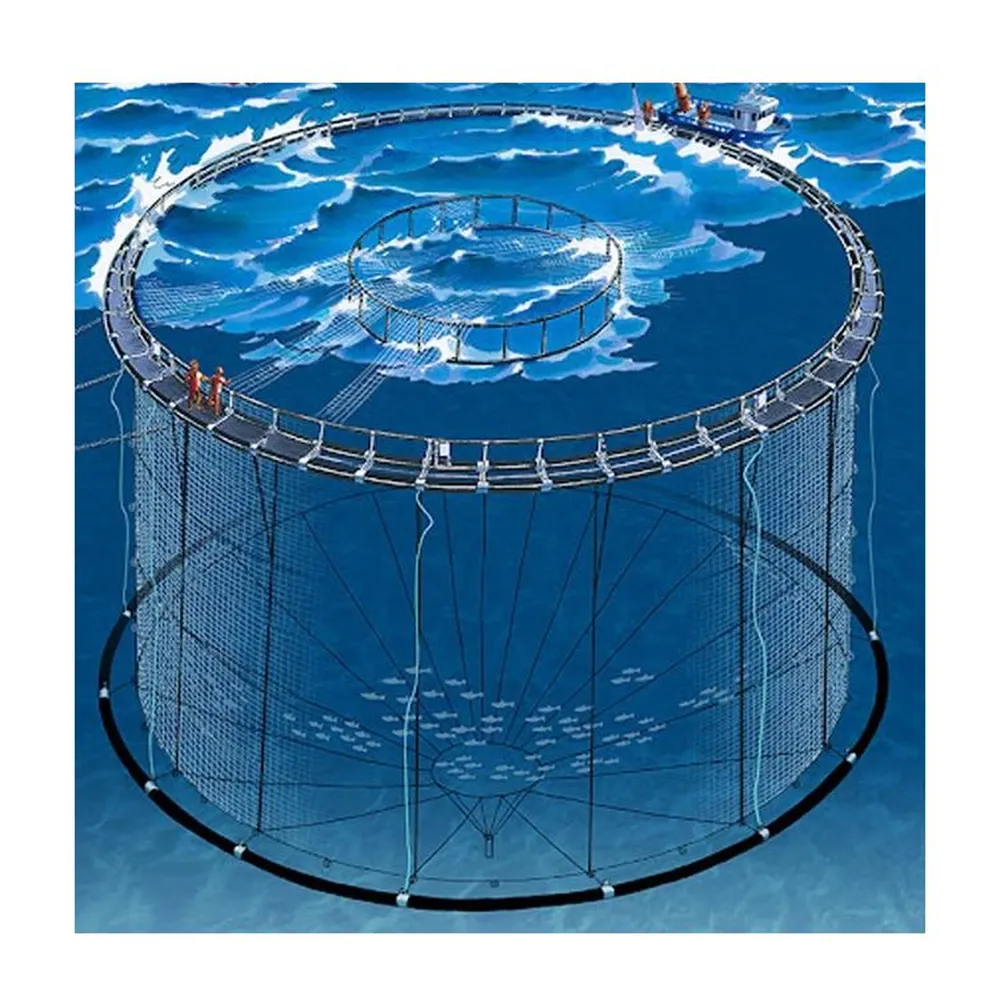
In the high-stakes environment of marine and freshwater aquaculture, PE Netting minimizing losses begins with the integrity of the containment system. The industry is rapidly shifting from traditional materials to high-tensile-strength polyethylene (PE) netting. By combining polymer science with advanced weaving techniques, this material has become the gold standard for preventing escapes and ensuring operational stability in the face of escalating environmental challenges.
1. Engineering Resilience: Superior Tensile and Tear Resistance
The main method to prevent biomass loss is to utilize the anti-kinetic energy capacity of the net. The strength of high-strength polyethylene nets (which usually contain high-density polyethylene or ultra-high molecular weight polyethylene reinforcing materials) is 30% to 80% higher than that of conventional PE netting materials.
Dynamic load management: The elongation after rupture is controllable (15% – 30%), and this net can absorb the continuous impact of strong waves and ocean currents without causing permanent deformation.
Impact dispersion effect: The multi-strand winding and double-layer weaving process ensures that local stress caused by the aggregation of high-density fish schools or foraging frenzy will not lead to the rupture of the mesh.
2. Environmental Adaptability and Corrosion Resistance
Unlike nylon (PA), nylon loses its strength when soaked in salt water, while polyethylene (PE) is chemically inert.
Anti-aging formula: After adding UV protection additives, our high-strength mesh fabric can extend the product’s lifespan to 5 to 8 years, which is twice as durable as ordinary polyethylene materials.
Thermal stability: Its brittling temperature is as low as -60°C. In extremely cold environments, the mesh structure can still maintain flexibility, avoiding the “winter cracking” phenomenon commonly seen in northern sea areas.
3. PE Netting Operational Efficiency: Lightweight and Low Drag
The efficiency of aquaculture is not only related to the growth of fish, but also to the labor force. The density of high tensile strength polyethylene material is 0.91 – 0.96 grams per cubic centimeter, which has a significant advantage in strength-to-weight ratio.
Reducing labor costs: Its lightweight characteristic simplifies the installation and replacement process, and reduces the demand for heavy lifting equipment.
Fluid power performance: The smooth fiber surface can reduce friction with the fish skin, lower the risk of infection, and at the same time, its low resistance design can prevent the cage frame from deforming under strong water flow.
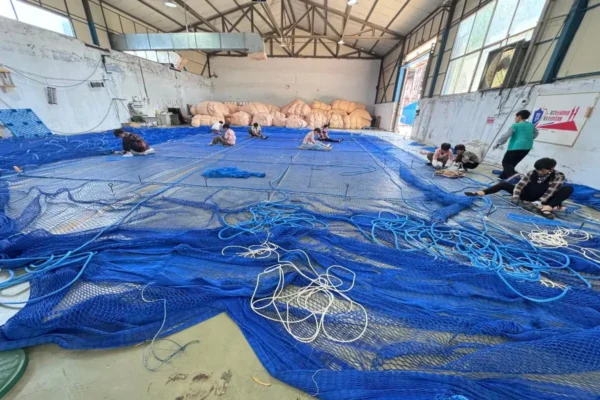
4. Biofouling Resistance and Longevity
Biofouling will significantly increase resistance and cause damage to the net surface.
Surface treatment: Special polyethylene fibers have undergone wear-resistant treatment, making it more difficult for oysters and algae to attach to them.
Strengthening nodes: Heat fusion strengthening nodes can prevent the mesh structure from wearing out at the connection points, thereby significantly reducing the frequency of high-pressure cleaning and maintenance.
5. Strategic Cost-Effectiveness and Sustainability
Although there are ultra-high-strength fibers like aramid, high-strength polyethylene (PE) offers the best return on investment (ROI).
Economic advantage: It has excellent performance but costs only 1/3 to 1/2 of ultra-high molecular weight polyethylene, making it the optimal choice for large-scale intensive agriculture.
Environmentally friendly life cycle: As a recyclable polymer, it complies with global standards for sustainable aquaculture and can reduce the risks of “invisible fishing gear” and marine plastic pollution.
6. Versatility Across Diverse Aquaculture Scenarios
From deep-sea gravity cages to high-density freshwater reservoirs, polyethylene materials with high tensile strength can be customized according to requirements:
Deep-sea operations: Carefully designed to withstand the huge structural tension caused by wind and waves at sea.
Industrial RAS support: Suitable for equipment in land-based systems that require durability and resistance to acid corrosion.
Don’t let substandard netting be the weak link in your offshore operations. Our high-tensile PE netting solutions are engineered to provide the ultimate balance of mechanical strength and cost-efficiency. Contact our technical team today for a customized netting specification that matches your farm’s hydrodynamic challenges.