Why Aquaculture Accessories Matter More Than You Think
Enter any fish farm – whether it’s a coastal cage farm or an inland recirculating water facility – and you will first notice those large-scale facilities: huge water tanks, industrial-grade filtration equipment, and kilometers of pipes. But if you ask any experienced farm manager what keeps them awake at night, they will tell you about those details.
A corroded connector damaged in a typhoon. A leaking pipe joint that contaminated the water overnight. A missing step plate that led to an accident.
Aquaculture components are not glamorous or beautiful, but they can determine whether a farming system can operate continuously for several years or experience failures every quarter. This guide details which factors are crucial when selecting components for marine aquaculture systems and land-based RAS systems.
Marine Aquaculture Components – Built for Brutal Conditions
What does “marine grade” really mean?
The sea is not static – it erodes, impacts, and constantly tests your equipment. And the environment faced by marine-type net cage is sufficient to completely damage ordinary industrial within a few months:
Continuous seawater immersion (with a salt concentration of 35ppt or above)
Wave impact force exceeding 3 to 5 tons per square meter
Ultraviolet radiation in tropical/subtropical regions causing material aging
Biological adhesion caused by oysters, mussels, and algae
Extremely rapid temperature changes between 5°C and 35°C
This is why the choice of materials cannot be compromised. Here are some feasible solutions:
Floating and structural components:
High-density polyethylene floating tubes – with UV stability function, with a lifespan of over 10 years, and not prone to cracking in cold water environments
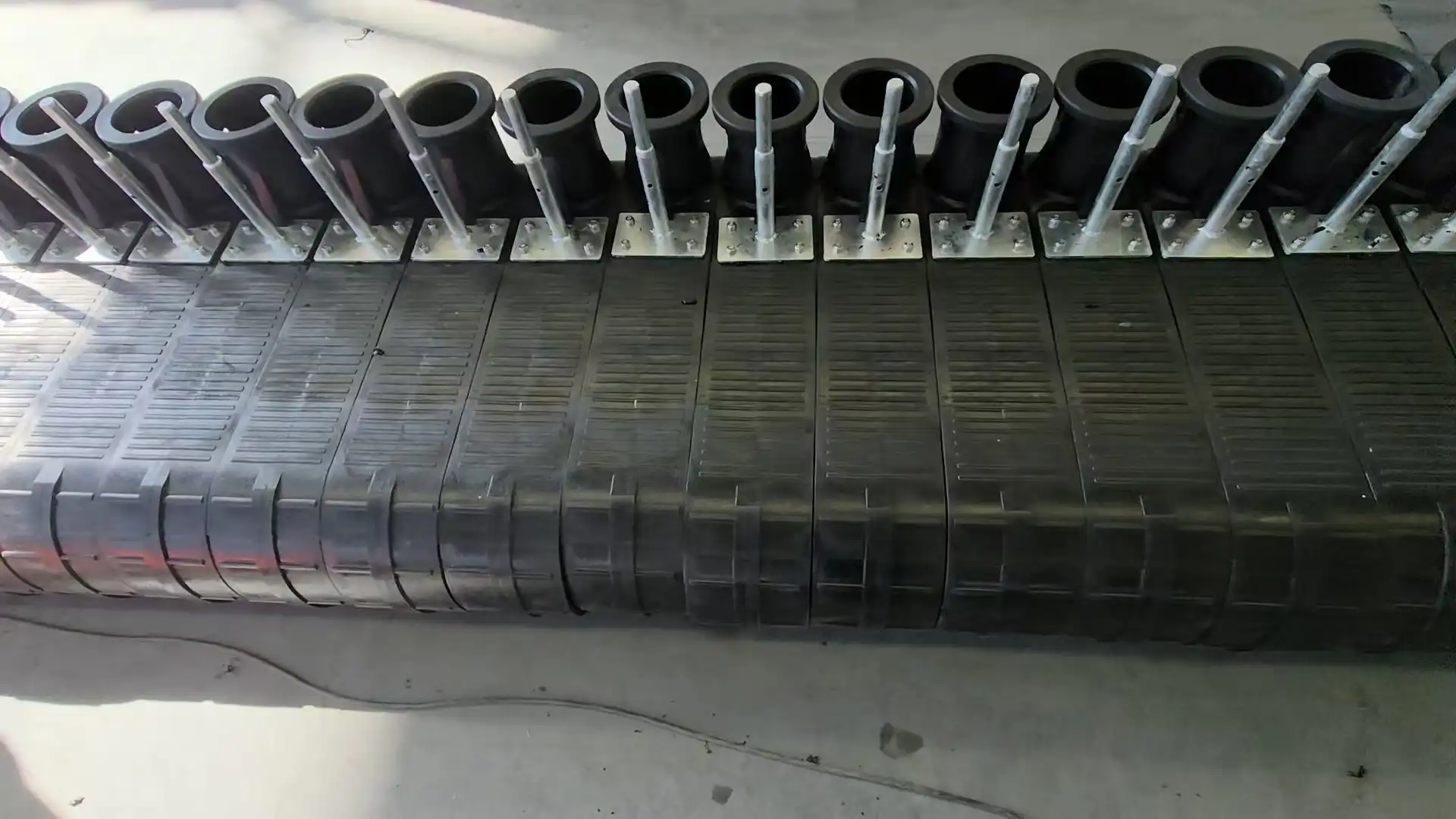
Stainless steel connectors (minimum 316L) – able to resist pitting corrosion, tested for load, and capable of withstanding twice the working load
Hot-dip galvanized support frame – with a zinc coating thickness of ≥86 microns, providing protection for 15 years or more
Safety and operation components:
Anti-slip steps – with a diamond pattern or perforated design, equipped with drainage holes to prevent icing
Reinforced walkway sections – with a load rating of 400 kilograms per square meter, modular design for easy quick replacement
Land-Based RAS – The Water Quality Backbone
Beyond “Tank” and “Filter”
The quality of a recirculating aquaculture system depends on its weakest link – and this link is usually found in the auxiliary equipment. The main components (water tanks, biological filters, and paddle-wheel filters) have received much attention, but the following are the factors that truly maintain stable water quality:
Water treatment accessories:
Microscreen/Ballasted filter:
Replaceable filter screens (mesh size varies depending on the fish species, ranging from 40 – 100 microns)
Spray nozzles (with self-cleaning and anti-clogging designs)
Drive motor and transmission belt
Importance lies in: Blockage of the spray nozzles can cause a 40% decrease in filtration efficiency within 48 hours. A farm lost 200 kilograms of young bass because a $15 nozzle was overlooked.
Protein skimming unit:
Venturi nozzle (compatible with ozone)
Collection cup with drain valve
Air flow diffuser (optimal bubble size is 0.5 – 2 millimeters)
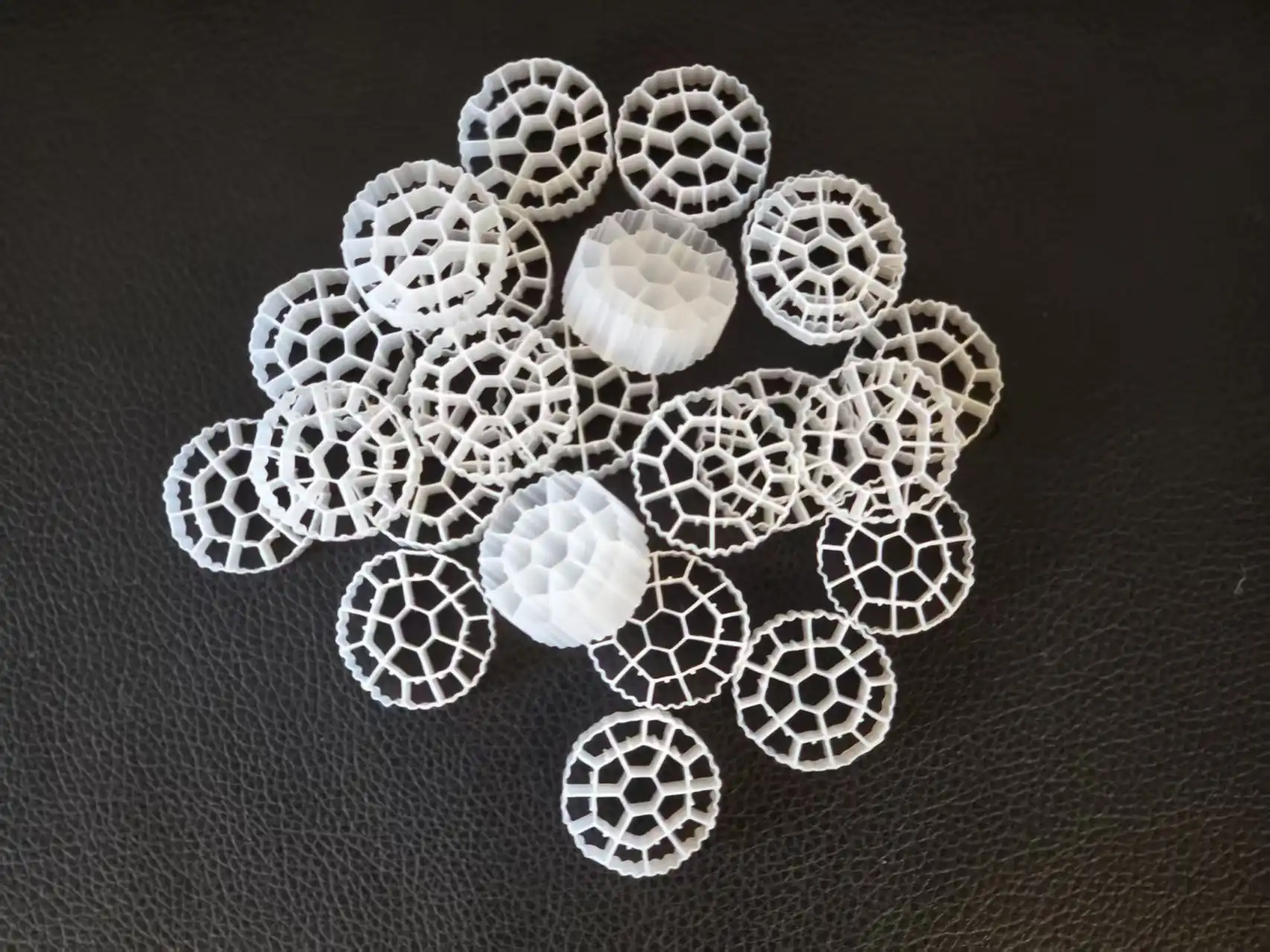
Biological filter (MBBR):
Biological medium carrier (surface area 500 – 800 square meters per cubic meter)
Medium retention net
Aeration grille
Ultraviolet disinfection unit:
Quartz sleeve (replaced once a year)
Ultraviolet lamp (effective lifespan of 8,000 – 10,000 hours)
Flow sensor and alarm device
Future Trends in Aquaculture
Smart monitoring integration: Sensors embedded in structural parts (corrosion sensors in connectors, load cells in anchors)
Biodegradable options: Experimental bio-based plastics for temporary components
Modular standardization: Industry moving toward ISO standards for cage components (finally)
Need Help Selecting Equipment?
Whether you’re building a new marine cage system or upgrading your RAS facility, the right accessories make the difference between smooth operations and constant firefighting.