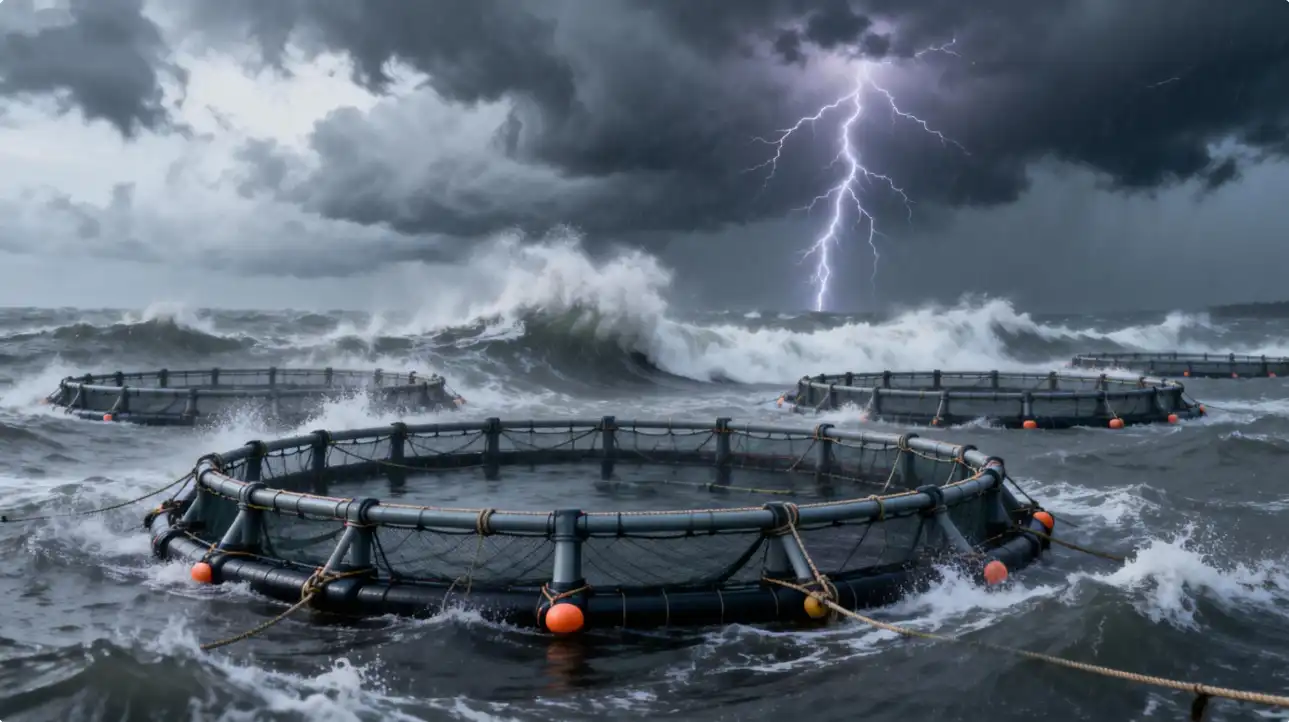
Introduction: Why Typhoon Preparedness Matters in Cage Fish Farming
For aquaculture farmers operating cage fish farming systems in typhoon-prone regions, extreme weather is not a question of if — it’s a question of when. Every typhoon season brings the threat of strong winds, violent waves, and unpredictable sea conditions that can destroy fish cage equipment, cause massive fish escapes, and disrupt aquaculture operations for weeks or even months.
The financial impact can be devastating. A single typhoon can wipe out an entire season’s aquaculture investment. That’s why typhoon-resistant fish cage systems — designed and engineered from the ground up — are not a luxury but a necessity for any serious cage fish farming operation.
The good news? Aquaculture losses can be significantly reduced through systematic planning in structural design, material selection, equipment configuration, and professional installation. In this article, we’ll break down the key engineering strategies that help cage fish farming operations survive and recover from extreme weather events.
1. Fish Cage Structural Safety: The First Line of Defense Against Typhoons
When a typhoon strikes, every fish cage must endure continuous wave impact, intense wind loads, and repeated structural stress cycles. The fish cage structure is either your strongest shield — or your weakest link in the entire aquaculture system.
Why HDPE Fish Cages Outperform Rigid Structures in Typhoon Conditions?
Traditional rigid fish cage frames are vulnerable to catastrophic failure under extreme forces. Once a critical joint breaks, the entire aquaculture system can collapse.
High-strength HDPE (High-Density Polyethylene) fish cage structures take a fundamentally different approach. Their inherent flexibility allows them to absorb and redistribute external forces through controlled deformation, rather than resisting them to the point of fracture. This design philosophy dramatically reduces the risk of:
- Structural cracking and breakage of the fish cage frame
- Total aquaculture system collapse
- Cascading failures across connected fish cage units
HDPE is also highly resistant to UV degradation, saltwater corrosion, and chemical exposure, making it an ideal material for long-term cage fish farming operations in harsh marine environments.
Fish Cage Buoyancy Configuration and Surface Balance Design
Equally important is how the fish cage behaves at the water’s surface during a storm. Without proper buoyancy engineering, fish cages can experience violent rocking, tilting, and even capsizing — leading to total aquaculture loss.
A scientifically designed buoyancy system for fish cages achieves several critical objectives:
- Minimizes excessive shaking and overturning risk under high-wave conditions
- Reduces structural fatigue caused by repetitive motion cycles
- Protects netting and connection components from accelerated wear and tear
- Maintains a stable operating platform for the aquaculture system even when sea conditions deteriorate
When buoyancy, balance, and structural flexibility work together, the result is a fish cage system that bends without breaking — exactly what every cage fish farming operation needs when facing typhoon-force conditions.
2. Modular Fish Cage Design: Dispersing Risk and Accelerating Aquaculture Recovery
No matter how strong a fish cage system is, zero damage is never guaranteed in a major typhoon. That’s why the ability to contain damage and recover quickly is just as important as prevention in any aquaculture operation.
How Modular Fish Cage Design Reduces Systemic Failure
A modular fish cage structure divides the aquaculture system into independent but interconnected units. This architecture offers a crucial advantage: localized damage stays localized.
Instead of one failure triggering a chain reaction that destroys the entire cage fish farming installation, a modular fish cage system ensures that:
- Stress is distributed across multiple fish cage units, preventing any single point from bearing excessive load
- One damaged fish cage module does not compromise the structural integrity of adjacent modules
- The overall aquaculture system maintains functional stability even if individual fish cage sections are affected
Faster Post-Typhoon Fish Cage Inspection and Repair
After a typhoon passes, time is critical for any cage fish farming operation. Every day of downtime means lost aquaculture production, increased mortality risk for fish stock, and mounting financial losses.
Modular fish cage systems are significantly easier to inspect, diagnose, and repair compared to monolithic structures:
| Aquaculture Recovery Task | Monolithic Fish Cage System | Modular Fish Cage System |
|---|---|---|
| Damage inspection | Complex, time-consuming | Section-by-section, systematic |
| Component replacement | Often requires full fish cage disassembly | Replace individual fish cage modules only |
| Return to aquaculture operation | Weeks to months | Days to weeks |
| Cost of repair | High (system-wide) | Lower (targeted fish cage replacement) |
By enabling rapid, targeted repairs, modular fish cage design helps aquaculture farmers resume normal cage fish farming operations as quickly as possible — minimizing revenue loss and protecting remaining fish stock.
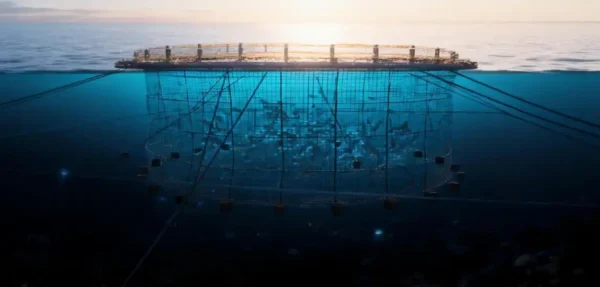
3. Fish Cage Connections and Fixings: The Often-Overlooked Weak Point in Aquaculture
In many typhoon damage cases, it’s not the fish cage frame or the netting that fails first — it’s the connectors, fasteners, and fixing systems holding the aquaculture installation together.
Why Fish Cage Connection Systems Deserve Special Attention
During extreme weather, fish cage connectors experience:
- Repeated dynamic loading from wave action
- Multi-directional pulling forces as the fish cage structure flexes
- Vibration-induced loosening over extended storm durations
- Corrosion acceleration due to saltwater spray and submersion
If a single critical connection point fails, it can cause a fish cage module to detach, netting to tear open, or the entire aquaculture cage to lose structural coherence — leading to massive fish escape and equipment loss.
Engineering-Validated Fish Cage Connection Solutions
High-performance cage fish farming systems use connection components that are:
- Load-tested and validated for specific force scenarios relevant to fish cage operations
- Designed with anti-loosening mechanisms to resist vibration fatigue
- Corrosion-resistant (marine-grade stainless steel, specialized polymers, or galvanized solutions)
- Compatible with the specific fish cage structure to ensure proper force distribution across the aquaculture system
Fish Cage Mooring Systems: Anchoring the Entire Aquaculture Operation
Beyond cage-to-cage connections, the mooring system is what keeps the entire cage fish farming installation in position during a typhoon.
A properly engineered fish cage mooring system must be matched to:
- Local seabed conditions (sand, mud, rock, coral)
- Water depth and current patterns at the aquaculture site
- Fish cage type, size, and total aquaculture system weight
- Expected maximum wind and wave forces for the region
The right mooring configuration can prevent fish cage drift, reduce rotational stress on cage structures, and maintain safe spacing between fish cage units — all critical factors during typhoon conditions in any cage fish farming operation.
4. Aquaculture Engineering Experience and On-Site Implementation: The Human Factor
Even the best-designed fish cage equipment can underperform if it’s poorly installed, incorrectly configured, or inappropriately positioned at the aquaculture site.
Site-Specific Fish Cage Layout Optimization
Every cage fish farming site has unique characteristics:
- Wave direction and fetch distance
- Current speed and seasonal variation
- Water depth and tidal range
- Proximity to coastline, reefs, or other structures
An experienced aquaculture engineering team will optimize the fish cage layout and orientation based on these factors to:
- Reduce the wave-facing surface area of fish cages during prevailing storm directions
- Minimize inter-cage collision risk during high-wave events
- Ensure adequate spacing for emergency access and maintenance vessels
- Create sufficient safety redundancy in the overall aquaculture system design
Professional Fish Cage Installation and Commissioning
On-site implementation quality directly affects fish cage typhoon resistance performance. Key considerations for aquaculture installations include:
- Proper tensioning of fish cage mooring lines — too tight creates excessive stress; too loose allows dangerous drift
- Correct assembly sequence for modular fish cage components to ensure designed load distribution
- Thorough inspection and testing before the aquaculture system enters full operation
- Documentation and training for cage fish farming operators on emergency procedures and routine maintenance
The gap between a fish cage system that survives a typhoon and one that doesn’t often comes down to installation quality and operational preparedness.
5. Pre-Typhoon Preparation Checklist for Cage Fish Farming Operations
Beyond fish cage structural design and aquaculture equipment selection, cage fish farming operators should follow a systematic preparation protocol as typhoon season approaches:
Fish Cage Equipment Inspection
- ✅ Check all fish cage connection points and fasteners for signs of corrosion, loosening, or fatigue
- ✅ Inspect fish cage netting for tears, weak spots, or abrasion damage
- ✅ Verify fish cage buoyancy components are intact and properly inflated/sealed
- ✅ Test fish cage mooring line tension and inspect anchor points
Aquaculture Operational Preparation
- ✅ Harvest marketable fish early if a major typhoon is forecast to reduce potential aquaculture stock losses
- ✅ Reduce feeding 24–48 hours before expected typhoon arrival to minimize water quality degradation in fish cages
- ✅ Secure or remove loose aquaculture equipment (feeding systems, sensors, solar panels, lights)
- ✅ Reinforce critical fish cage connections with backup securing methods
Cage Fish Farming Emergency Planning
- ✅ Establish communication protocols with crew and emergency services
- ✅ Prepare post-typhoon fish cage inspection and aquaculture recovery plan with prioritized action items
- ✅ Ensure spare fish cage parts and repair materials are available onshore for rapid deployment
- ✅ Document insurance-required evidence (photos, fish cage equipment records, aquaculture maintenance logs)
Conclusion: Typhoons Are Unavoidable — But Catastrophic Aquaculture Losses Are Not
Typhoons will always be part of the reality for cage fish farming operations in tropical and subtropical waters. But the difference between a manageable setback and a devastating aquaculture loss lies in the decisions made long before the storm arrives.
By investing in:
- Typhoon-resistant HDPE fish cage structures with engineered flexibility
- Modular fish cage system design that contains damage and enables fast aquaculture recovery
- High-performance fish cage connections and mooring systems validated for extreme conditions
- Professional aquaculture site assessment, fish cage installation, and commissioning
- Proactive fish cage maintenance and pre-typhoon preparation protocols
…aquaculture farmers can dramatically reduce their cage fish farming risk exposure and build operations that are not just productive — but resilient, sustainable, and built to last through whatever the ocean delivers.
Planning for the worst doesn’t mean expecting it. It means ensuring your fish cage systems and aquaculture operations are ready when it comes.