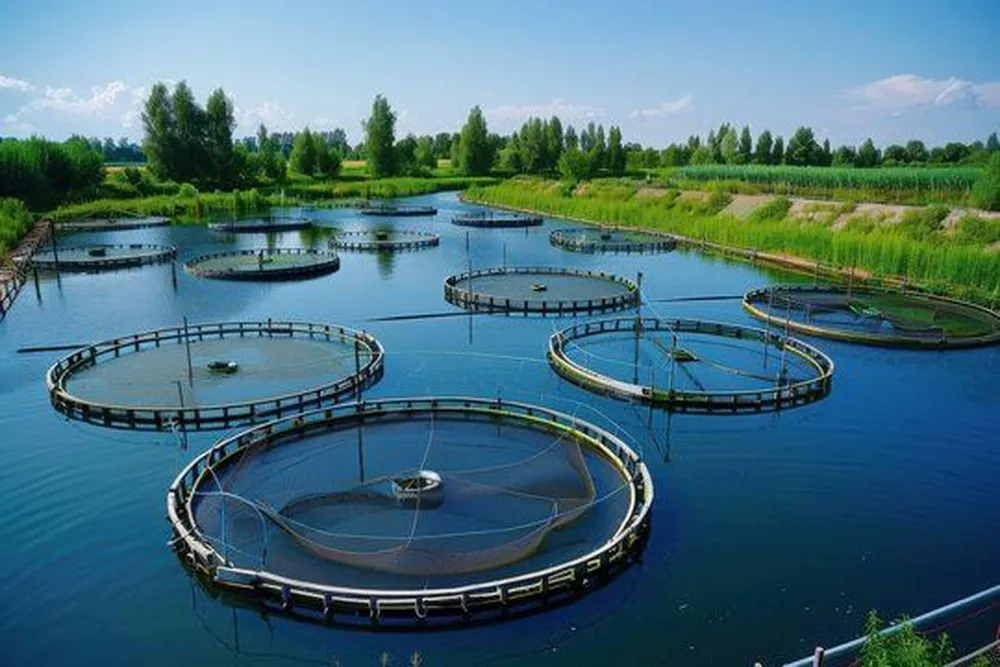
Solving the problems of low density and low efficiency in cage aquaculture is a significant challenge facing the industry. This can be addressed through four aspects: optimizing the aquaculture model, upgrading equipment, refining management, and ecological adaptation. These can be combined with specific technologies and scientific management to improve quality and efficiency.
Firstly, optimizing the aquaculture model improves space utilization. A three-dimensional, stratified aquaculture approach can be adopted, utilizing different ecological niches in different water layers (e.g., surface layer for sea bream, mid-layer for bass, and bottom layer for cod or shellfish). This allows for the polyculture of multiple species across different water layers within the same cage, increasing space utilization and avoiding the waste of water space caused by a single species. For example, in deep-sea, wave-resistant cages, large yellow croaker can be cultured in the upper layer, while sea cucumbers or abalone can be polycultured in the lower layer. This utilizes the bottom space and allows shellfish to filter uneaten feed, purifying the water and improving space utilization.
Simultaneously, a modular cage cluster design should be adopted, abandoning the traditional single-cage layout and using a “matrix cage” (e.g., 6-12). The net cages are constructed as unit units, connected by floating piers to achieve intensive management of the aquaculture area. Simultaneously, the size of the net cages is upgraded (e.g., from traditional 10m diameter net cages to large deep-water net cages with a diameter of 30m), increasing the volume of each cage and effectively improving the stocking density per unit water volume.
A combined land-based and offshore net cage model is also adopted. Larger fry (e.g., fish weighing over 50g) are raised in land-based nursery ponds before being transferred to offshore net cages, reducing mortality during the acclimatization period at sea and shortening the aquaculture cycle; this also improves aquaculture efficiency. The land-based facilities can also serve as overwintering and temporary holding facilities, preventing net cages from being idle in winter and increasing utilization.
Secondly, the net cage equipment is upgraded to ensure high-density aquaculture. This includes upgrades to wind and wave resistance and escape prevention technologies. HDPE deep-water wind and wave resistant net cages (replacing traditional wooden or small net cages) are used, paired with high-strength polyester netting (tensile strength ≥500N) and a corrosion-resistant frame to withstand strong winds and waves, preventing forced reductions in stocking density due to net cage damage. An underwater monitoring system (camera + sensors) can also be installed to closely monitor the integrity of the netting, promptly detect and repair holes, and reduce losses caused by escape.
Strengthen the configuration of intelligent water quality control equipment.
This includes fully automatic feeders that adjust feeding amounts and frequencies based on fish size, water temperature, and dissolved oxygen levels to prevent excessive uneaten feed from polluting the water. It also includes dissolved oxygen monitors and aeration equipment (such as nano-aeration discs and paddlewheel aerators) that automatically activate when dissolved oxygen levels drop below 5 mg/L, ensuring adequate dissolved oxygen levels for high-density aquaculture (≥6 mg/L for conventional stocking densities and ≥7 mg/L for high-density stocking). Optional water purification devices (such as biological filters and micro/nano bubble generators) can also be added to degrade harmful substances like ammonia and nitrite, maintaining the aquatic ecological balance and providing a stable environment for high-density aquaculture.
Third,focusing on management to achieve a refined level of control.
Implement a “rotation farming system”: after 2-3 harvests in the same net cage, transfer the cultured species or leave the cage empty for 1-2 months, using bottom conditioners (such as zeolite powder) to restore the aquatic environment and prevent disease accumulation.
Seedling selection and acclimatization: Choose superior fish fry (such as selected varieties with fast growth and strong disease resistance) and implement gradient acclimatization from low salinity to high salinity and from indoor to outdoor environments to improve fry survival rates (from 60%-70% to over 85%), laying the foundation for high-density aquaculture.
Finally, cage culture must be adapted to a suitable ecological environment, greatly expanding the potential of aquaculture space. The aquaculture layout should shift from nearshore shallow waters to offshore deep waters. Deep water areas have faster water exchange and more stable water quality, allowing for higher stocking densities while reducing nearshore pollution and interference with human activities.
Through the implementation of these measures, cage culture density is expected to increase by 30%-50%, the culture cycle can be shortened by 15%-20%, and overall efficiency can be improved by over 40%. Therefore, equipment upgrades can guarantee increased stocking density, refined management can reduce risks under high density, and ecological adaptation can expand aquaculture capacity, ultimately achieving a dual improvement in density and efficiency.