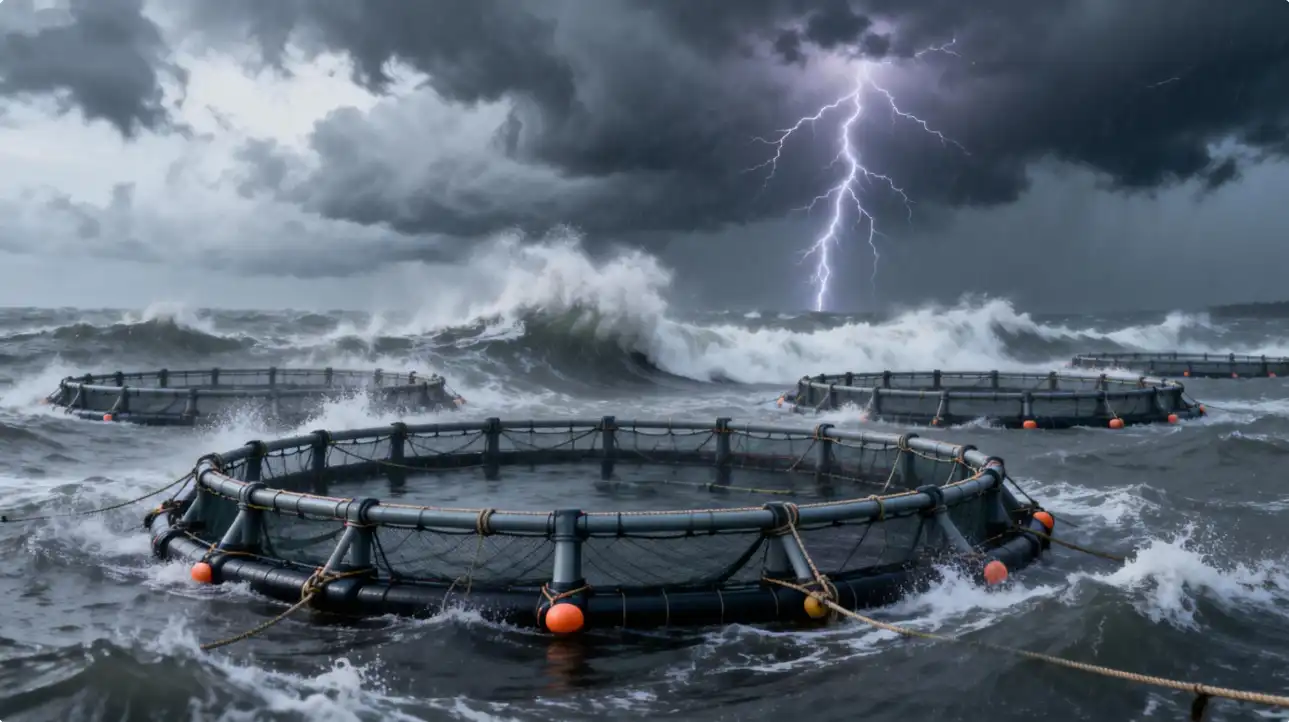
In open sea aquaculture, typhoons are always one of the major risks that farmers must face. Strong winds, high waves, and complex sea conditions can damage aquaculture equipment and lead to problems such as fish escaping and equipment malfunction. Therefore, systematic design and equipment selection in the initial stages are crucial considerations.
A safe and stable structure is the first line of defense against typhoons.
When a typhoon hits, aquaculture cages need to withstand continuous wave impact and repeated structural loads. Compared to rigid structures, high-strength HDPE cage structures with a certain degree of flexibility can absorb external forces through moderate deformation, thereby reducing the risk of fracture and overall failure. Scientific buoyancy configuration and surface balance design help reduce violent shaking and overturning risks of the cages under high wave conditions. Stable buoyancy not only reduces structural fatigue but also effectively reduces wear and tear on the netting and connecting components, providing a more reliable operating foundation for the aquaculture system in extreme weather. Reasonable material selection and structural design help improve the overall safety of the cages in harsh sea conditions.
Modular design helps disperse risks and improve recovery efficiency.
Modular cage structures can distribute the overall stress to different units, preventing localized damage from causing systemic failure. After a typhoon, modular structures are also easier to inspect, maintain, and replace locally, helping the aquaculture system resume normal operation as quickly as possible and reducing downtime.
Connections and fixings are key to overall stability.
In a typhoon environment, connectors and fixing systems are often the first parts to bear the impact. High-strength, engineering-validated connection solutions can effectively reduce the risk of loosening and detachment, ensuring that each structural unit maintains overall coordinated operation under complex sea conditions. Matching different cage structures, environmental conditions, and different types of mooring systems can further enhance overall wind and wave resistance and reduce the risk of system drift or instability.
Engineering experience and on-site implementation are equally important.
In addition to the equipment itself, reasonable installation methods, layout design, and on-site commissioning also have a significant impact on typhoon resistance. Optimizing system layout and installation based on specific sea conditions helps reduce unnecessary structural stress during typhoons and improves the overall system’s safety redundancy.
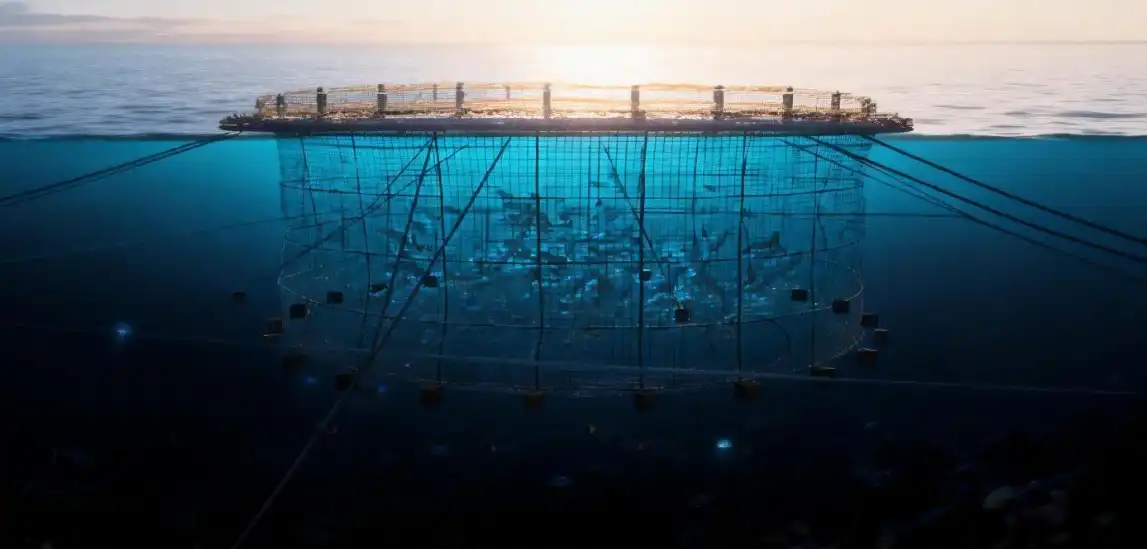
Typhoons are unavoidable, but losses can be controlled through reasonable design and engineering measures. By planning ahead in various aspects such as structural design, equipment selection, system configuration, and installation, offshore aquaculture systems can achieve greater safety and resilience in the face of extreme weather conditions. This helps aquaculture farmers effectively reduce risks and achieve more stable and sustainable offshore aquaculture operations.