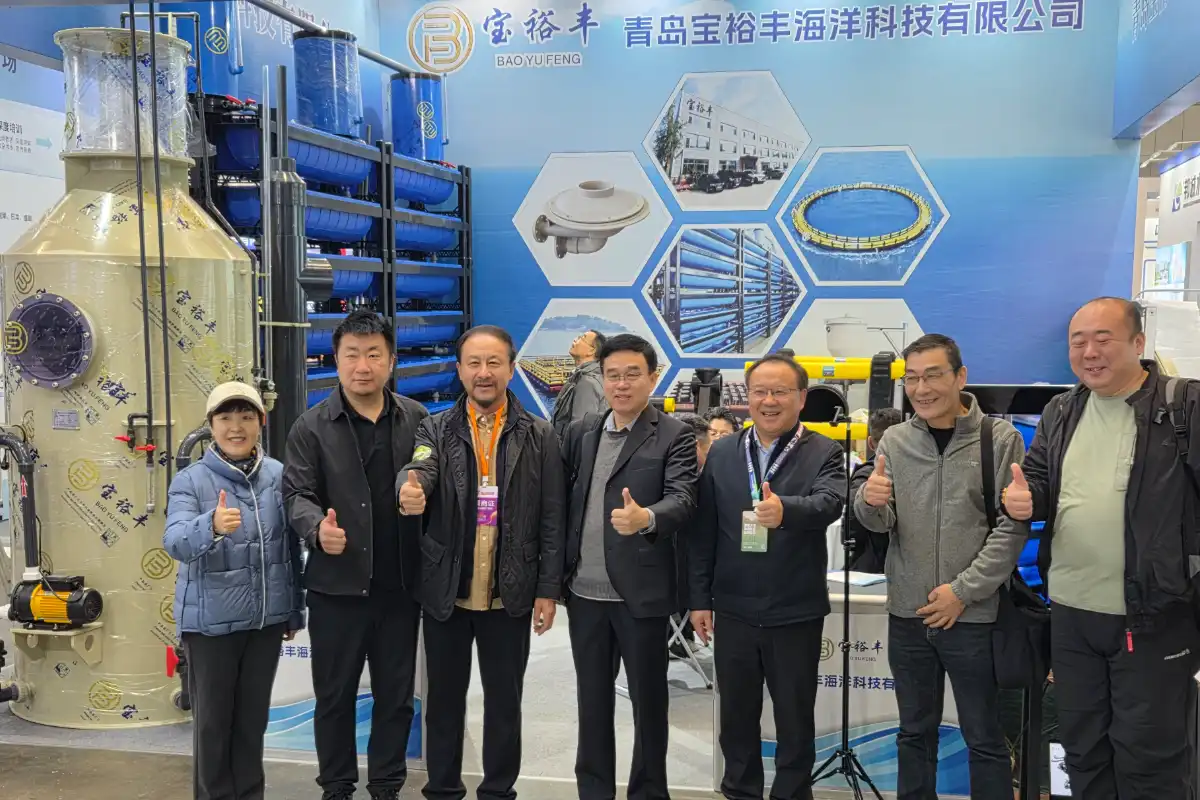
2026, we bring our the newest product in the world – Sea urchin farming equipment to CAE. It’s no longer just “capacity expansion”, but “efficiency competition”
On March 14, 2026, at the Nanjing Aquaculture Exhibition, there was a notable change:
People no longer discussed “how much to cultivate”, but were instead discussing – how to cultivate more stably, more economically, and more replicable.The cost of labor is rising, environmental protection requirements are stricter, and the cost of trial and error is also increasing.
This has led many breeding enterprises to start rethinking one thing:
Is there a more standardized and controllable solution?
This time, HARWAY brought nothing too extensive, but it was very focused:
A set of truly implementable land-based RAS system
A brand-new product: sea urchin farming equipment (world’s first release)
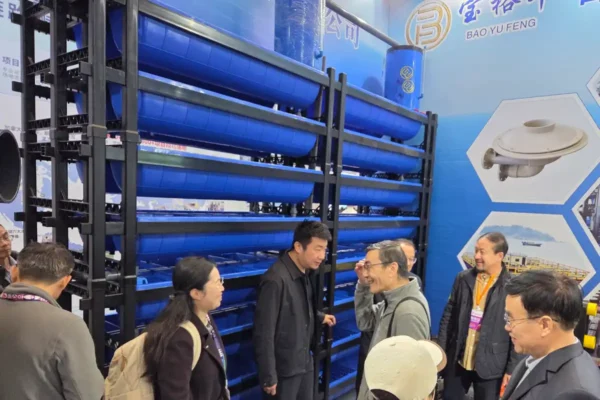
Global First: Why did we develop the sea urchin farming tank?
What the industry has always lacked is not technology, but “standard products”.
In many markets, there has always been a problem with sea urchin farming:
There is no truly standardized breeding unit
Many breeding methods rely on experience, temporary construction or modification of containers, which brings several direct problems:
Unstable survival rate
Low management efficiency
Difficult to scale up
This is precisely why we developed this product.
What problems does this sea urchin breeding tank solve?
At the exhibition site in Nanjing, we didn’t talk much about concepts but directly demonstrated the usage logic:
Independent partition design
Reduces mutual interference and makes the breeding more controllable
Efficient water flow structure
Improves oxygen solubility and water exchange efficiency
Saltwater-resistant material
Designed for long-term use rather than short-term consumption
Easy management structure
Makes daily cleaning, sorting, and observation more efficient
Many overseas customers (especially those dealing with high-value varieties), spent significantly more time at the exhibition site.
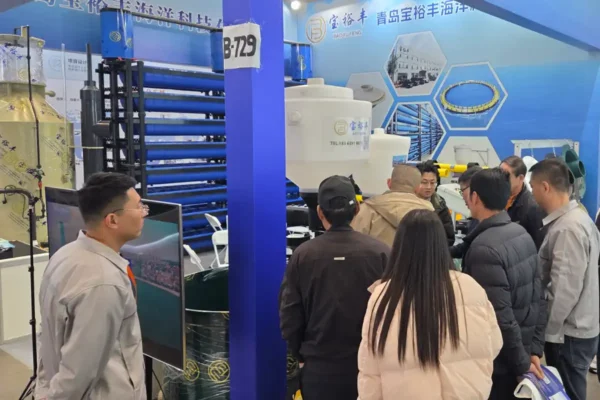
RAS System: Customers no longer ask “Can it be used?”, but “How long will it take to recover the cost?”
From single devices to complete systems
At this exhibition, RAS was still the part that was asked about the most by customers.
But a significant change is obvious:
Customers are no longer so concerned about the parameters of individual devices,
they are more concerned about – what the entire system looks like when it runs.
So the focus of our presentation this time is:
Drum filtration
Protein separation
Biological filtration
Automatic control
Not selling individual devices separately, but presenting a complete operating logic.
Three core focuses of RAS in 2026
From the on-site discussions, the main issues revolve around three points:
1. Energy consumption
Can it be further reduced? Long-term costs are the key factor.
2. Automation level
Can we reduce the reliance on manual operations?
3. System stability
Can it still operate stably under high-density farming?
Our approach is also straightforward:
Reduce unnecessary energy consumption links
Replace manual judgments with automatic control
Use modular design to lower system risks
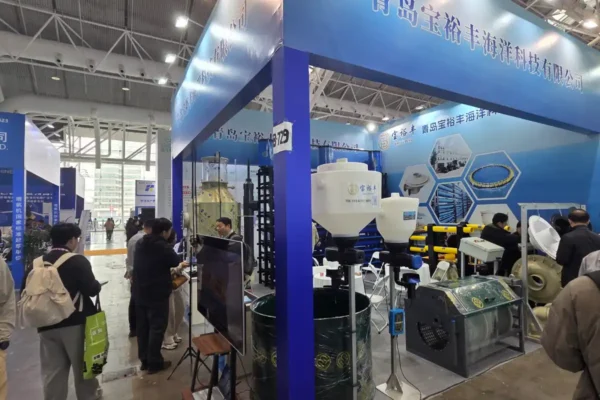
Next, we will continue to do two things:
Optimize the RAS system to make it more stable and energy-efficient
Promote the implementation of sea urchin breeding tanks in more markets
If you are planning a farming project or are looking for a more efficient solution,
you can directly contact us. We can work together to calculate the solution.